GPS safety for older adults: what families should know
Understanding elderly GPS trackers and how they support independence
When an older family member lives alone or spends time outside the home, it is natural to worry about their safety. Memory lapses, a sudden fall, or simply losing their bearings can turn a routine walk into a stressful situation. An elderly GPS tracker is one tool designed to reduce that worry. These devices use satellite positioning to share a person's location with a nominated family member or carer, often in real time. But what should a family actually look for, and how does the technology work day to day?
What an elderly GPS tracker does
At its simplest, a GPS tracker is a small wearable device that reports where the wearer is. Many models are worn as a pendant, clipped to a belt, or strapped around the wrist like a watch. The device picks up signals from satellites to calculate its position, then sends that data over a mobile network to a smartphone app or a monitoring service. The person who cares for the older adult can then open the app and see a map showing the wearer's location. Some devices also show location history, so you can check where someone has been during the day.
For families in New Zealand, the practical benefit is peace of mind. If an older relative goes for a walk and does not return at the expected time, you can quickly check their location rather than waiting anxiously or making phone calls. If they have wandered off due to confusion, knowing where they are can help you reach them faster. The same technology also helps if they become disoriented in a new environment, such as a shopping centre or a park they do not know well.
How the technology fits into daily life
Most elderly GPS trackers are designed to be worn all the time, like a medical alert pendant or a watch. The wearer does not need to do anything special for the device to work. It checks its position regularly and sends updates automatically. Many devices have a battery that lasts several days or longer, depending on how often the location is recorded and transmitted. Some models need to be charged every few days, while others use a rechargeable battery that lasts a week or more.
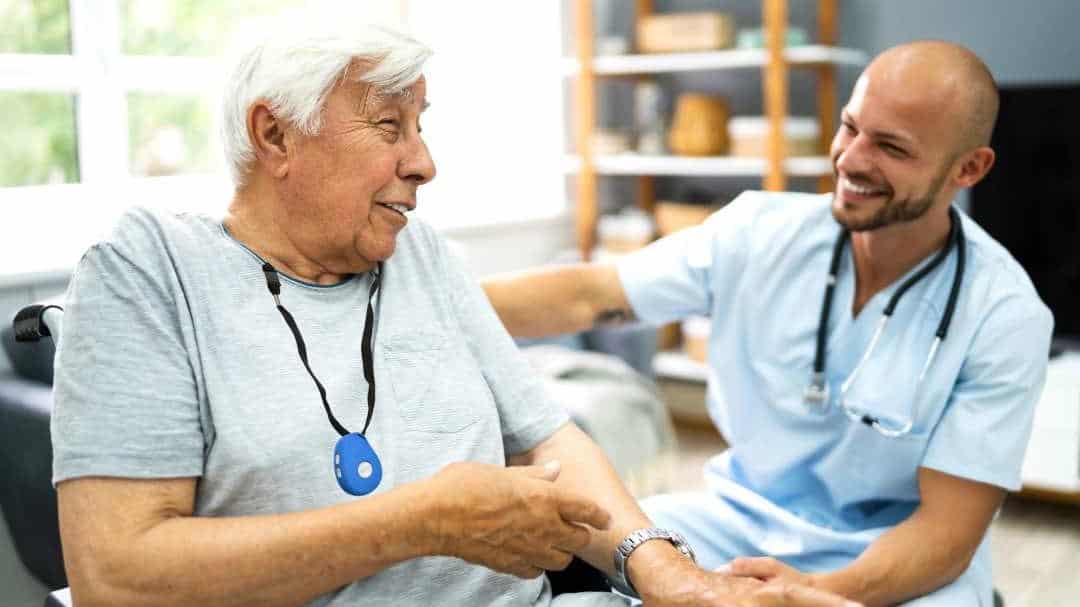
Mobile coverage is important. In New Zealand, most GPS trackers use the same mobile networks as phones, so they work in towns and cities and along main roads. Rural areas can be patchier. Before choosing a device, it makes sense to check whether the mobile network it uses has good coverage in the places where the older adult spends time. Some trackers use a combination of GPS and Wi-Fi or Bluetooth to improve accuracy indoors, which can be useful in large buildings or homes with thick walls.
Fall detection and emergency alerts
A fall is one of the biggest risks for older adults. Many GPS trackers now include automatic fall detection, which uses sensors inside the device to recognise the motion and impact of a fall. When a fall is detected, the device can send an alert to a family member or a monitoring service. Some devices also have a manual SOS button, so the wearer can press it if they need help but cannot reach a phone. This kind of two-way calling allows the person to speak directly to a responder, which can be reassuring in a frightening moment.
It is worth knowing that fall detection is not perfect. Sensors can sometimes trigger a false alarm if the device is knocked or dropped, and they may not detect every type of fall, especially a slow slide or a collapse against a wall. Most devices let you cancel an alert if it is a false alarm, but the system still provides a safety net that would not exist otherwise.
Privacy and memory concerns
Some families hesitate because they worry about invading an older relative's privacy. It is a valid concern. GPS tracking can feel like surveillance if it is introduced without explanation. The best approach is to talk openly about why it is being considered. Frame it as a way to support independence, not to restrict it. An elderly GPS tracker can let someone continue walking, gardening, or visiting friends without having to check in constantly by phone. For the older adult, knowing that help is a button press away can reduce their own anxiety about going out alone.
Memory concerns are another reason families consider these devices. A person with mild dementia or age-related forgetfulness might leave the house for a short errand and become confused about the route home. A GPS tracker means you can guide them back by phone or meet them at their location. Some devices also allow you to set a "safe zone" or geofence, so you get an alert if the wearer leaves a familiar area, like their neighbourhood or a local park.

What to look for when choosing a device
Not all elderly GPS trackers are the same. Here are a few practical points to consider:
- Battery life, A device that needs daily charging can be a burden. Look for one that lasts at least a few days on a full charge, so the routine is simple.
- Size and comfort, If the device is bulky or uncomfortable, the older adult may stop wearing it. A lightweight pendant or a slim watch-style band is usually better.
- Two-way calling, Being able to speak to a responder directly can make a big difference in an emergency. Check whether the device supports voice calls or just sends a text alert.
- Mobile network compatibility, In New Zealand, most devices work on Spark or Vodafone networks, but coverage varies. Check the coverage map where the device will be used most.
- Monthly costs, Some services charge a monthly fee for the SIM card and monitoring. Others, such as familyr.co.nz, offer a device that does not have ongoing monthly monitoring fees, which can make the cost easier to manage.
One other thing to keep in mind is that the device is only as good as the network it uses. If the wearer lives in an area with weak mobile coverage, the location updates may be delayed or inaccurate. Always test the device in the actual places where it will be used before relying on it fully.
How it works with emergency services
When a fall is detected or an SOS button is pressed, the alert goes first to a family member or a monitoring centre. From there, someone can call emergency services if needed. The device usually shares the wearer's GPS coordinates, so the responder can be directed to the exact location. This is especially useful if the person cannot speak or is disoriented. The two-way calling feature means the responder can ask questions and assess the situation before deciding what to do.
It is important to know that GPS trackers are not a replacement for a phone. They are a supplement. The wearer should still have a way to call for help if the device is lost or runs out of battery. Some families keep a simple mobile phone in the same bag or pocket as the tracker, just in case.
Practical tips for getting started
Introducing a GPS tracker works best when it feels like a shared decision. Talk about it together, show the older adult how the device looks and how it works, and let them try it on. Set up the app on your own phone so you can see the location and alerts. Test the fall detection or SOS button together in a safe setting, so everyone knows what to expect. Over time, the device becomes a normal part of the routine, like wearing a watch or carrying a key ring.

For families who want a simple, no-fuss option, a device like the one from familyr.co.nz combines GPS, fall detection, and two-way calling without the ongoing monthly fees. That can make it easier to keep the device active and charged, because there is no ongoing cost to worry about. The key is to choose something the older adult will actually wear and use, and to have the conversation early, before a crisis happens.
Final thoughts
GPS safety for older adults is about staying connected, not about surveillance. A well-chosen elderly GPS tracker can help someone maintain their independence while giving their family a practical way to stay informed and respond quickly when needed. By understanding how the technology works, what its limits are, and what to look for in a device, families can make a confident choice that supports everyone's peace of mind.